
Professional Flat Roof Repair in Plano, TX
Flat and low-slope roofs protect commercial buildings, multi-unit properties, and residential extensions across Plano — but they face unique challenges that pitched roofs don't. From ponding water and open seams to UV-degraded membranes, we diagnose the specific failure and deliver targeted repairs that restore waterproof performance.
Flat Roof Problems Common in Plano & North Texas
Flat roofs operate differently from pitched systems. Without slope to shed water quickly, even minor failures can lead to significant moisture intrusion. These are the conditions we encounter most often on flat roofs in the Plano area.
Ponding water that doesn't drain within 48 hours
Standing water accelerates membrane deterioration, adds weight to the roof structure, and attracts organic growth. In Plano, where sudden heavy thunderstorms can drop several inches in an hour, blocked scuppers or undersized drains quickly create ponding conditions that persist well after the storm passes.
Open seams and separated membrane laps
Heat-welded and adhesive seams can fail over time due to thermal expansion and contraction. North Texas summers regularly push surface temperatures above 160°F on dark membranes, followed by significant cooling at night — a repeated cycle that stresses every seam and lap joint on the roof.
Punctures from foot traffic, equipment, or debris
HVAC units, satellite dishes, and rooftop equipment are common on Plano commercial buildings. Foot traffic around these installations — along with hail impacts and storm-blown debris — can puncture the membrane, creating water entry points that are often difficult to spot without a systematic inspection.
Blistering, cracking, or alligatoring membrane surfaces
Extended UV exposure causes flat roof membranes to lose flexibility over time. The surface develops cracks, blisters, or an alligator-skin pattern — all signs that the material is becoming brittle and can no longer expand and contract with temperature changes without breaking.
Flat Roof Systems We Repair in Plano
Each flat roofing system has specific repair requirements. Using incompatible materials or techniques can void existing coverage and create new failure points. We match every repair to the installed membrane type.
TPO Membrane Roofing
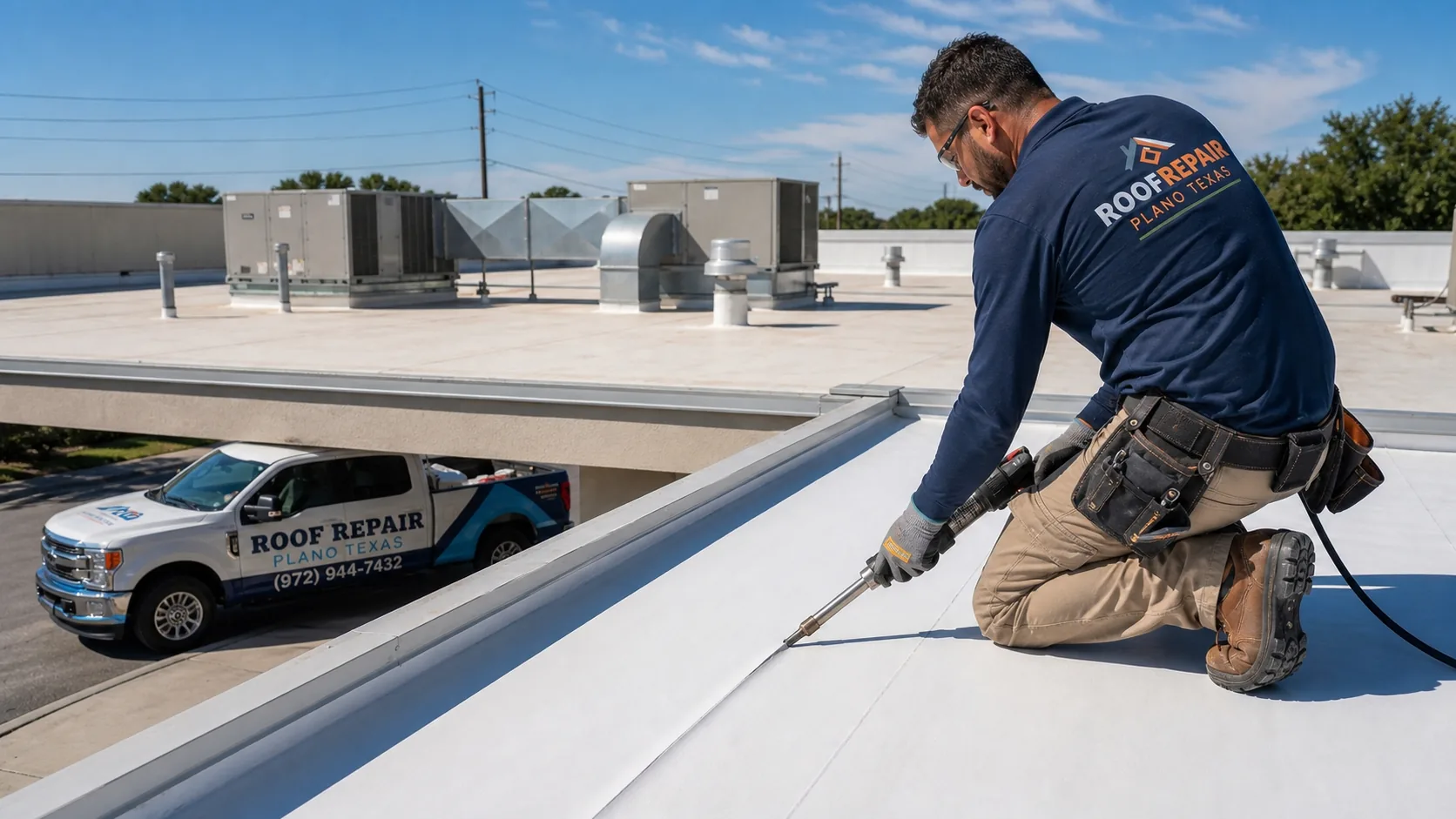
Thermoplastic polyolefin membranes are common on Plano commercial and retail properties. Repairs involve heat-welding patches to restore failed seams, addressing punctures, and resealing flashing terminations at walls and curbs. The white reflective surface helps reduce cooling costs in the Texas heat but requires compatible repair materials.
Modified Bitumen Systems
Modified bitumen roofs are found on many older commercial buildings and residential additions in Plano. These systems use multiple layers of asphalt-based material that can develop open laps, blisters, and surface cracking. Repairs typically involve torch-applied or cold-adhesive patches matched to the existing material composition.
Built-Up Roofing (BUR)
Built-up systems consist of alternating layers of asphalt and reinforcing fabric. Over time, the surface gravel can shift, exposing the felt layers to UV damage. Repairs address exposed areas, open blisters, and split seams while maintaining the layered composition that gives BUR systems their waterproofing performance.
Why Proper Drainage Is Critical on Flat Roofs
On a pitched roof, gravity moves water to the gutters. On a flat roof, the drainage system is the only mechanism that prevents water from sitting on the membrane surface. When drains, scuppers, or internal gutters become blocked or damaged, water accumulates and begins to deteriorate the roofing system from above.
In the Plano area, storms can produce several inches of rainfall in a short period. A partially blocked drain that handles light rain without issue may be completely overwhelmed during a spring thunderstorm, leaving water standing for days. We evaluate drainage capacity as part of every flat roof inspection and address blockages, improper slope, and damaged drain components alongside any membrane repairs.
Leak Repair for Flat RoofsHow We Approach Flat Roof Repairs
Flat roof repairs require a systematic process that accounts for the membrane type, drainage conditions, and the underlying deck structure. Here is what to expect when you schedule a flat roof evaluation.
Roof Surface & Drainage Survey
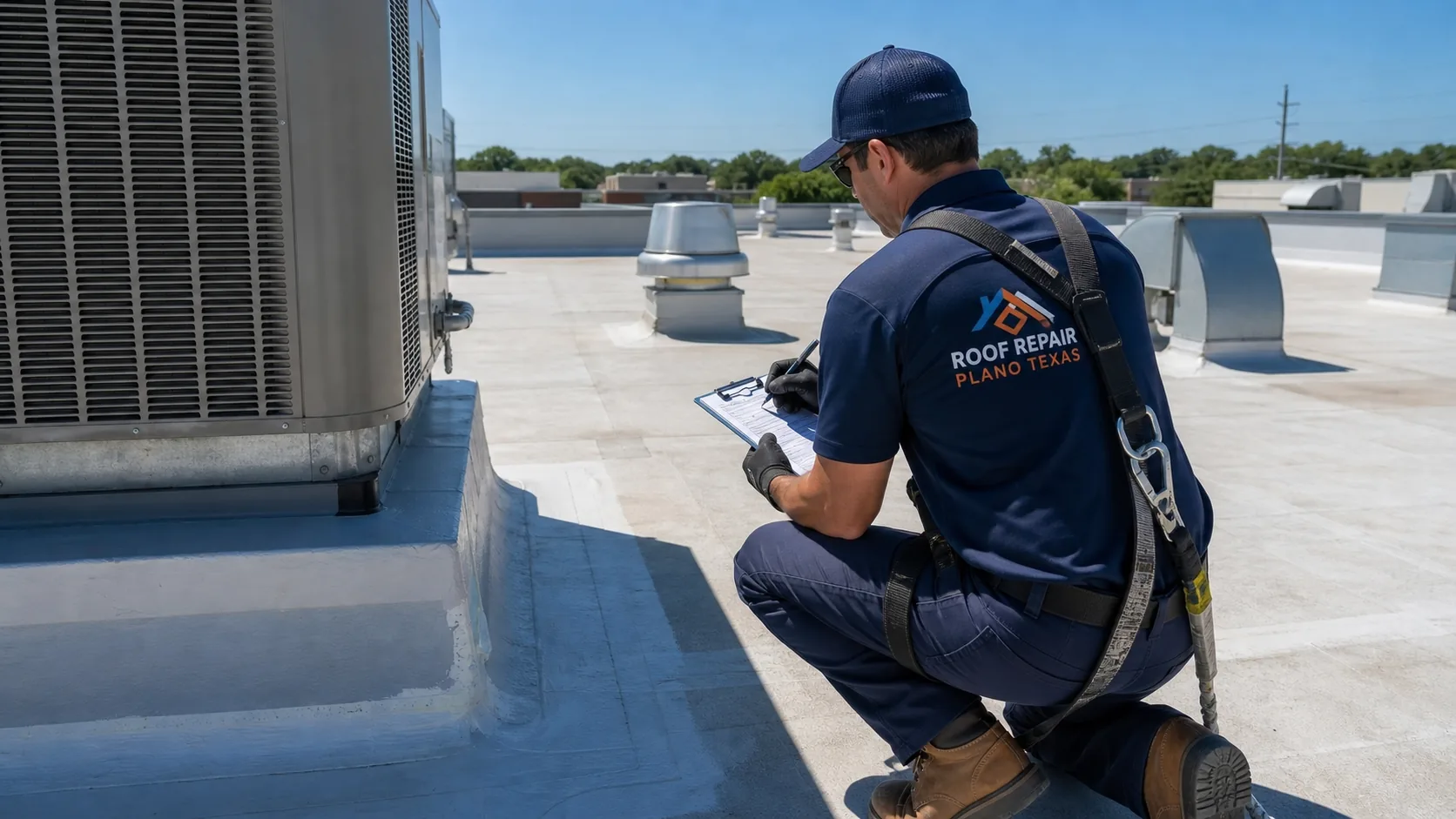
We walk the entire roof surface to identify ponding areas, membrane damage, and drain conditions. Every blister, puncture, open seam, and deteriorated flashing detail is documented with photos.
Moisture & Deck Assessment
We check for moisture beneath the membrane and evaluate the roof deck condition. Saturated insulation or soft decking areas may indicate long-term water intrusion that requires more than a surface repair.
System-Matched Repair
Using materials compatible with the installed membrane, we repair failed seams, patch punctures, reseal flashing terminations, and address drainage deficiencies. Incompatible materials can create adhesion failures, so correct identification of the roofing system is essential.
Water Test & Documentation
After repairs are complete, we verify that drainage is functioning properly and document the work performed. You receive a written scope of the completed repair along with photographs showing the before and after conditions.
A Note About Roof Coatings
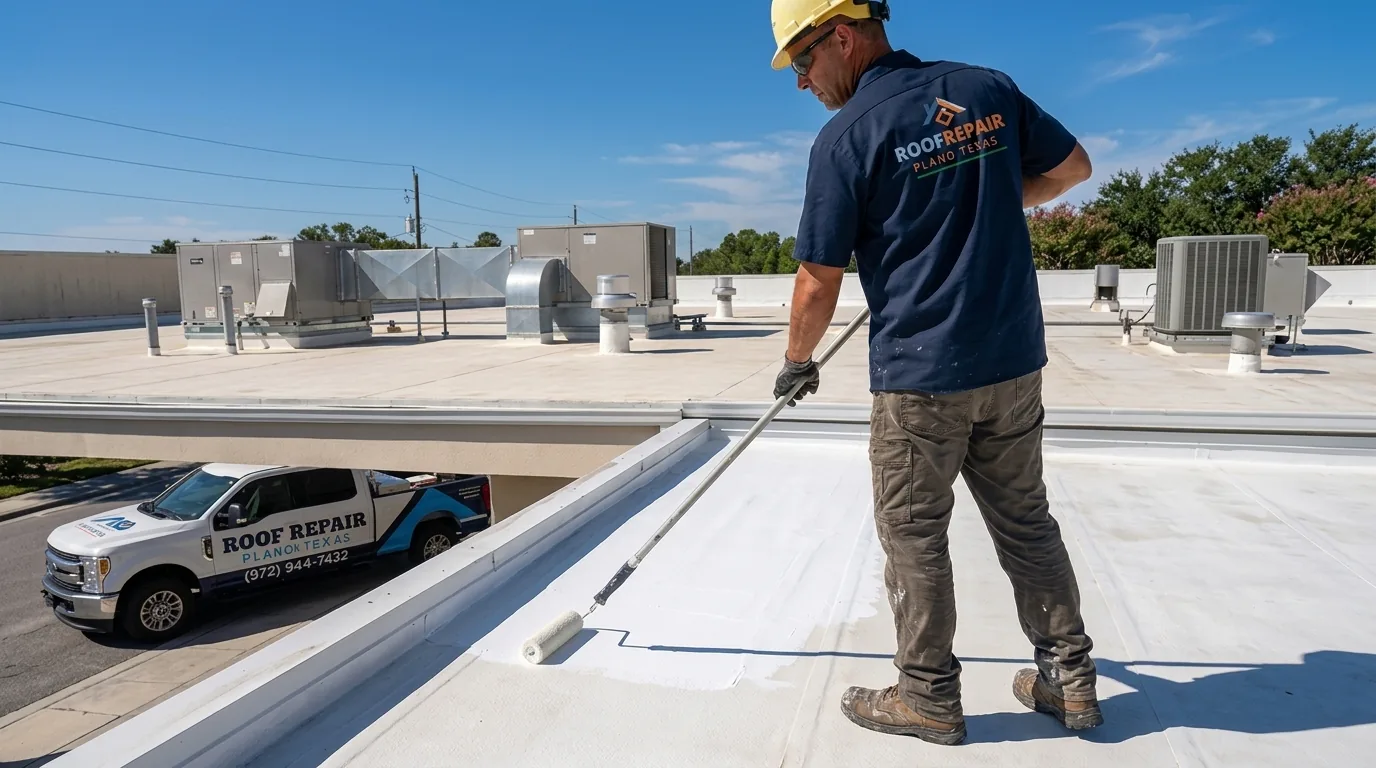
Roof coatings can provide UV protection and extend membrane life when applied to a structurally sound surface — but they are not a repair. Open seams, active leaks, saturated insulation, and deteriorated decking all need to be properly addressed before any coating is considered. Applying a coating over unrepaired failures simply traps moisture beneath the surface and accelerates the underlying damage. When a coating is appropriate, we recommend it. When repairs need to come first, we explain why.
When Flat Roof Repair May Not Be Enough
A targeted repair is appropriate when damage is isolated — a single puncture, a short section of open seam, or a localized flashing failure where the surrounding membrane and decking are still in serviceable condition.
However, when the membrane shows widespread brittleness, multiple areas of ponding water, saturated insulation across large sections, or the deck has deteriorated beneath the membrane, continued patching becomes less cost-effective than a planned replacement. We provide an honest assessment based on the actual roof conditions so you can make an informed decision about the most practical path forward.
Deck & Water Damage RepairFlat Roof Repair FAQs
Ponding water on flat roofs is usually caused by inadequate drainage, clogged drains or scuppers, settlement in the roof structure, or areas where insulation has compressed over time. In Plano, heavy thunderstorms can quickly overwhelm a drainage system that is partially blocked, leaving standing water that accelerates membrane deterioration.
Many flat roof problems — including isolated punctures, open seams, and localized membrane failures — can be repaired without replacing the entire roof. The decision depends on the membrane age, overall condition, number and extent of problem areas, and whether the decking beneath the membrane is still sound.
Membrane lifespan depends on the material, installation quality, UV exposure, and maintenance history. TPO and modified bitumen systems in Plano typically perform well for many years, but the extreme summer heat and UV exposure common in North Texas can accelerate aging — particularly on south-facing and west-facing surfaces with minimal shade.
A coating can extend the service life of a membrane that is still largely intact, but it is not a substitute for repairing actual failures. Open seams, punctures, and delaminated membrane sections need to be properly repaired before any coating is applied — otherwise, the coating simply covers the problem without addressing the cause of water entry.
Yes. We repair flat and low-slope roofing systems on commercial properties throughout Plano and Collin County, including office buildings, retail centers, warehouses, and multi-unit residential structures. Commercial flat roof repair follows the same diagnostic approach — identify the failure points, evaluate the membrane and decking condition, and provide a detailed repair scope.
Ponding Water, Membrane Damage, or an Active Flat Roof Leak? Schedule an Inspection
If your flat roof is showing signs of membrane failure, drainage problems, or active water entry, contact us to schedule an on-site evaluation. We will inspect the entire system, identify the specific problems, and provide a written repair scope with clear options — before any work begins.