
Reliable Roof Vent & Pipe Boot Repair in Plano, TX
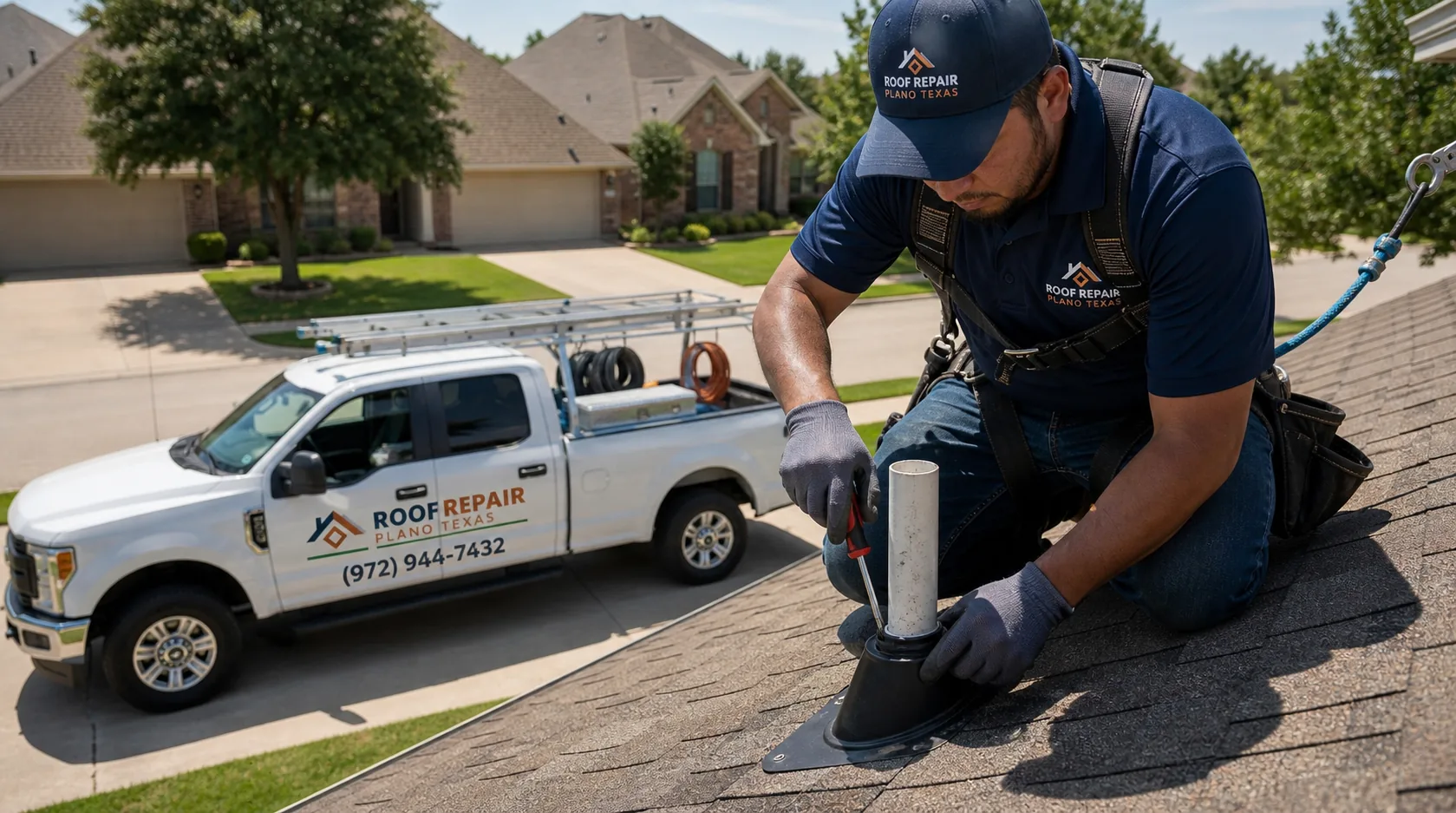
Every plumbing vent, exhaust fan, and roof-mounted opening requires a watertight seal where it passes through the roof surface. When these seals fail — and in Plano's heat, they eventually do — the result is a steady drip that damages decking, insulation, and interior finishes. We replace failed pipe boots, repair damaged vent caps, and restore these critical penetration seals.
Why Pipe Boots & Roof Vents Fail in Plano
Roof penetrations are among the first components to fail because they are directly exposed to the elements with no slope to shed water. Here's what happens over time — and why these small components cause some of the most persistent leaks we encounter.
Cracked and dried rubber pipe boot collars
The neoprene or EPDM rubber that seals around plumbing vent pipes is designed to flex with temperature changes, but the extreme UV exposure in North Texas breaks the material down faster than in milder climates. Once the rubber cracks, rain enters directly around the pipe — often just a slow drip that goes unnoticed until ceiling stains appear below.
Damaged or displaced vent caps
Metal vent caps can be dislodged by high winds, dented by hail, or corroded over time. A missing or damaged vent cap allows rain and debris to enter the duct opening. In Plano, spring hailstorms frequently damage vent caps that appear intact from ground level but have hairline cracks or warped edges that redirect water into the opening.
Failed sealants and loose base flashing
The base plate of a pipe boot or vent sits beneath the surrounding shingles and relies on sealant and proper shingle overlap for a watertight seal. Over time, sealant deteriorates, fasteners back out, and the shingles around the penetration lift or shift — creating gaps that allow wind-driven rain to enter even when the collar itself is still intact.
Multiple penetrations creating compound risk
A typical Plano home has three to six roof penetrations — plumbing vents, kitchen exhaust, bathroom exhaust, and possibly HVAC piping. Each one is a potential leak point. When several pipe boots are aging simultaneously, addressing them together during a single inspection is more practical and cost-effective than waiting for each to fail individually.
How We Replace Pipe Boots & Vent Seals
A pipe boot replacement is a focused repair, but it requires proper technique to integrate with the surrounding roofing material. Here's what the process involves.
Inspect All Roof Penetrations
We check every pipe boot, vent cap, and penetration seal on the roof — not just the one showing obvious failure. This often reveals additional components nearing the end of their service life that can be addressed in the same visit.
Remove Surrounding Materials
To properly replace a pipe boot, we lift or remove the shingles immediately above and around the penetration. This allows us to install the new boot base plate beneath the shingles as the original installation requires — not simply sitting on top of the existing material.
Install New Boot & Integrate
The new pipe boot is fitted to the pipe diameter, sealed to the roof deck, and the surrounding shingles are re-layered over the base flashing in the correct water-shedding sequence. We use UV-rated sealant designed for the temperature extremes found in North Texas.
Check Deck & Document
While the area is open, we inspect the decking around the penetration for moisture damage or softness. If the deck is sound, we complete the shingle integration and provide a written record of the repair with photos.
Don't Wait for the Ceiling Stain
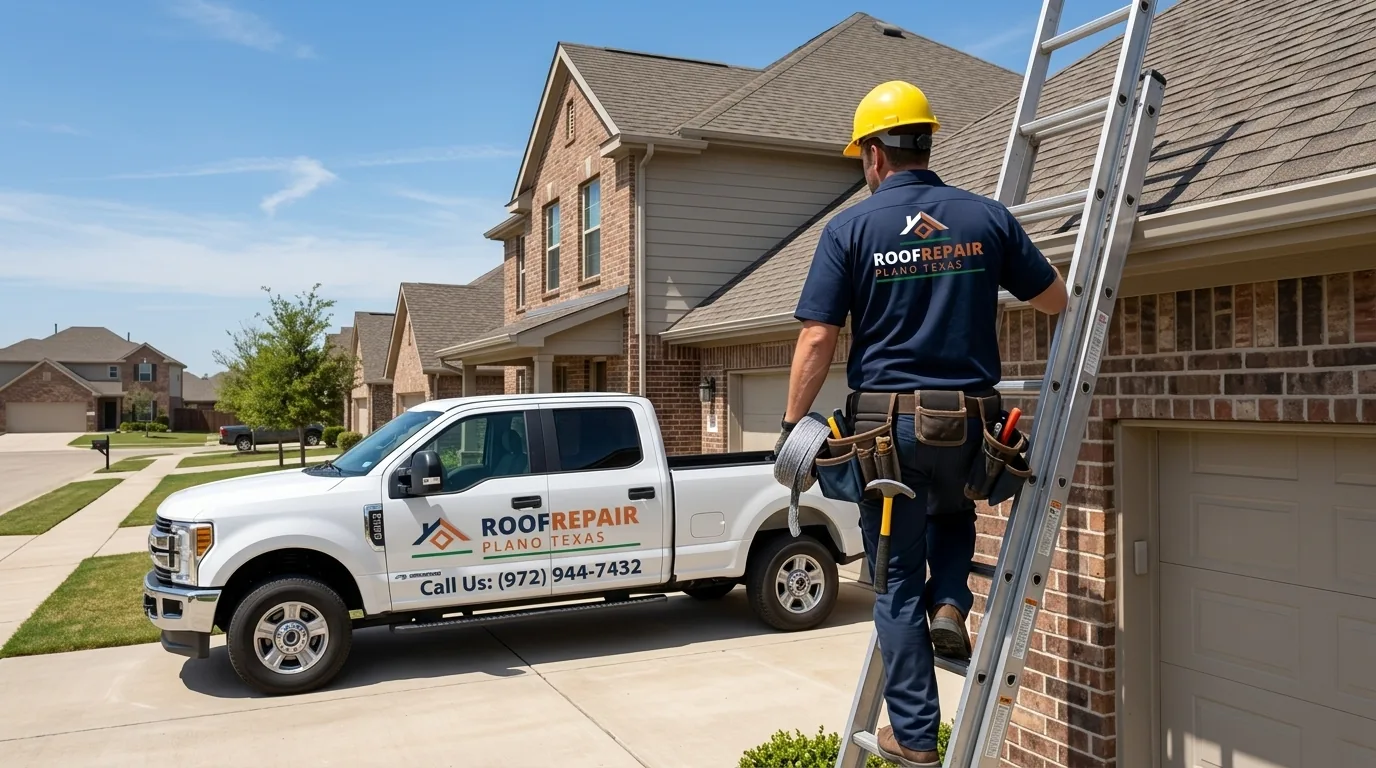
By the time a water stain appears on your ceiling near a bathroom or kitchen vent, the pipe boot or vent seal above has likely been leaking for weeks or months. The slow drip saturates insulation, dampens decking, and can develop musty conditions in the attic space — all before a single visible spot appears inside.
If your roof is more than eight to ten years old and you haven't had the penetrations inspected, a proactive evaluation can identify pipe boots that are nearing failure before they cause interior damage. In Plano's climate, where UV and heat accelerate rubber deterioration, this timeline is often shorter than homeowners expect.
Active Leak Repair ServicesVent & Pipe Boot Repair FAQs
A pipe boot is a rubber or neoprene collar that seals around plumbing vent pipes where they exit through the roof. The rubber deteriorates from constant exposure to UV radiation and extreme heat. In Plano, where summer roof surface temperatures routinely exceed 150°F, pipe boot rubber dries out, cracks, and pulls away from the pipe — creating a direct pathway for rainwater to enter the roof system.
Common signs include water stains on ceilings near bathrooms or kitchens (where plumbing vent pipes typically exit), dampness around interior vent pipe penetrations, and moisture on attic framing near the pipe opening. Because the leak is relatively small and constant, damage can accumulate over months before it becomes visible.
When the rubber has cracked, shrunk, or pulled away from the pipe, replacement is the more reliable option. Sealant applied over a deteriorated collar provides only a temporary fix. A new pipe boot with a fresh rubber collar and properly integrated base flashing restores the original seal quality.
Roof vents can leak, though the failure pattern is different. Vent caps may be dislodged by wind or hail, the metal housing can develop corrosion, and the base flashing can separate from the roof surface. While pipe boots tend to fail from UV deterioration, vent caps more commonly fail from storm damage or fastener issues.
Replacing a single pipe boot is typically completed within a few hours, including removing the surrounding shingles, installing the new boot, reintegrating the shingles, and sealing the assembly. When multiple penetrations need attention, we address them in a single visit to minimize disruption.
Cracked Pipe Boot or Damaged Roof Vent? Schedule a Quick Inspection
Pipe boot and vent seal failures are straightforward to repair when caught early — and far more costly to ignore. Contact us to inspect your roof penetrations, identify any failed or aging components, and get a clear repair estimate before damage spreads to the deck and interior.