
Storm, Hail & Wind Damage Roof Repair in Plano
Plano sits in one of the most active severe weather corridors in the country. Large hail, damaging straight-line winds, and intense thunderstorms regularly affect roofing systems across Collin County. We inspect, document, and repair storm-related roof damage — distinguishing between actual impact damage and conditions caused by normal aging or wear.
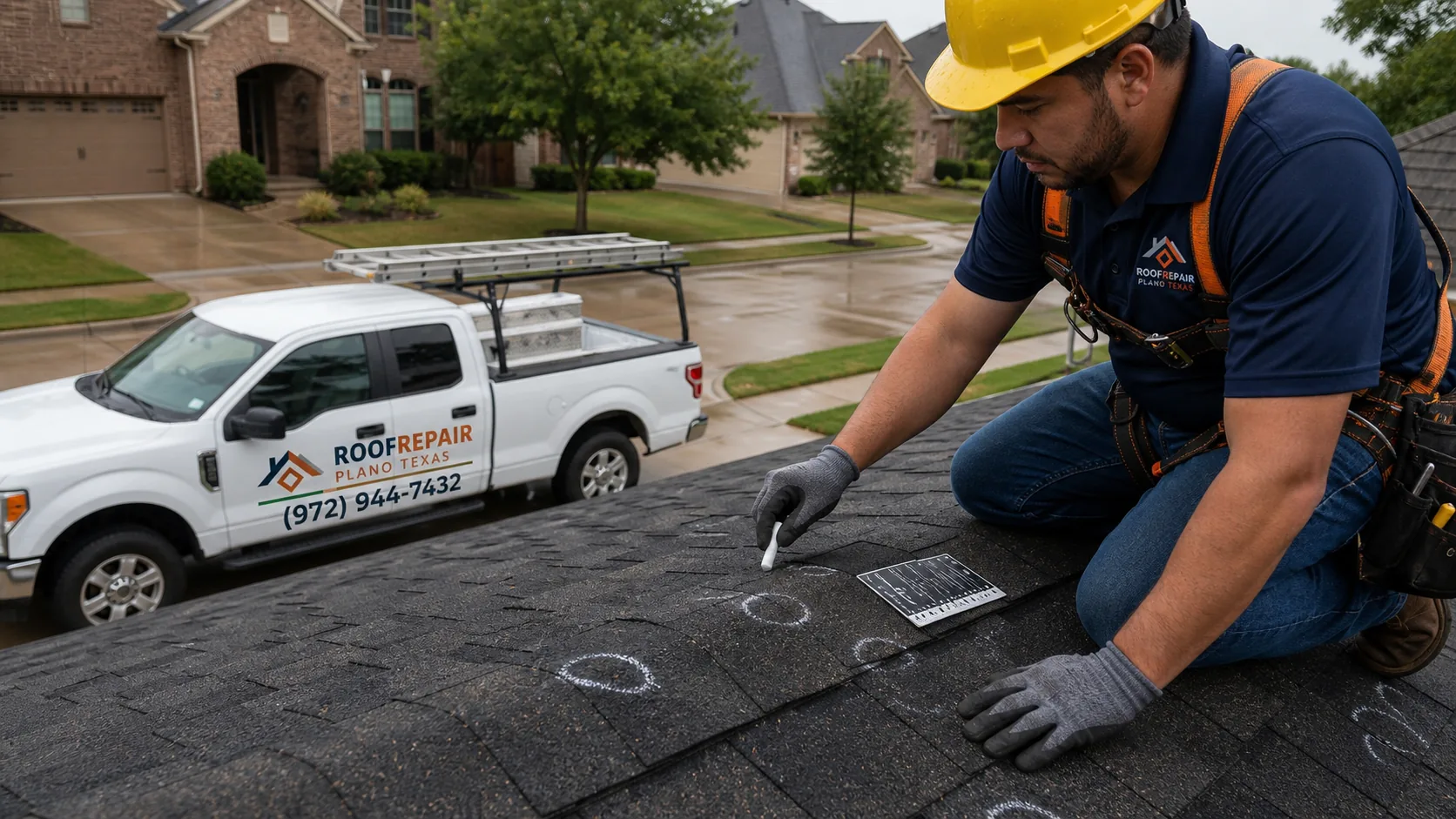
How Storms Damage Plano Roofs
Different storm events affect roofing systems in different ways. Identifying the damage type accurately is essential for proper repair and, where applicable, insurance documentation.
Hail Impact Damage
Large hail — common during North Texas spring and early summer storms — can bruise, crack, or dislodge shingles, dent metal flashing and vents, and fracture ridge cap materials. The impact displaces granules on asphalt shingles, weakening the material's UV resistance and shortening its remaining service life.
- Dark spots where granules are displaced
- Dented gutters, vents, and exposed metal
- Cracked or fractured ridge and hip caps
Wind Uplift & Wind Damage
Straight-line winds and tornado-related gusts can lift, crease, or remove shingle tabs, break adhesive strip bonds, and displace entire sections of roofing material. Wind can also pull flashing away from roof-to-wall transitions and loosen ridge caps along the roof peak.
- Lifted, creased, or missing shingle tabs
- Displaced ridge and hip cap materials
- Exposed underlayment at roof edges
Debris & Impact Damage
Falling branches, airborne debris from nearby construction or landscaping, and wind-blown objects can puncture the roofing surface, crack tiles, or damage decking beneath the roofing materials. This type of damage creates immediate entry points for water during subsequent rainfall.
- Punctures or holes in roofing surface
- Broken or displaced roofing materials
- Damaged decking visible beneath impact site

Post-Storm Inspection Process
After a significant weather event in Plano, a structured inspection identifies what was damaged, what was not, and what the appropriate repair path looks like.
Ground-Level Assessment
We begin with a visual review from ground level — checking gutters, downspouts, siding, and any visible roof surfaces for signs of impact, displaced materials, or wind damage. This initial assessment helps focus the on-roof inspection.
On-Roof Material Inspection
We systematically inspect the roof surface — evaluating shingle condition, checking for hail bruising and granule displacement, examining flashing connections, and testing adhesive bond integrity on wind-exposed areas. Vents, pipe boots, ridge caps, and other penetrations are individually inspected.
Photo Documentation & Damage Mapping
Every area of confirmed damage is photographed and documented with its location on the roof. This creates a clear record for repair planning and, when requested, supports insurance claim documentation. We distinguish between storm-related damage and pre-existing conditions.
Written Repair Scope & Estimate
Based on the inspection findings, we provide a written repair scope — detailing what needs to be replaced or repaired, the materials required, and an estimated cost. If the damage is widespread, we discuss the repair-versus-replacement evaluation honestly.
Storm Damage Insurance Documentation
When storm damage may be covered by your homeowner's insurance, accurate documentation is essential.
Storm Damage Repair FAQ
Hail damage on asphalt shingles often appears as dark spots where granules have been dislodged, exposing the underlying mat. On metal components, you may see dents or dimples. However, hail damage is not always visible from the ground and can be confused with blistering, foot traffic marks, or normal wear. A professional roof inspection is the most reliable way to confirm whether the damage is hail-related.
Whether to file depends on the extent of the damage, your deductible, your policy terms, and the potential repair cost. We provide detailed photo documentation and a written damage assessment that you can use when contacting your insurer. We do not guarantee coverage or claim approval — that decision rests with your insurance company.
Schedule an inspection as soon as conditions are safe after any significant storm event. Some insurance policies have filing deadlines, and undocumented damage can worsen with subsequent weather. Prompt inspection helps establish the damage timeline and supports any potential claim.
Yes. Wind can lift shingle tabs, break adhesive strip bonds, and crease shingles without fully removing them. These conditions are not always visible from the ground but can allow water infiltration during future rain events. Wind-driven rain can also force moisture beneath materials that appear intact from above.
Hail damage typically appears as random impact marks across the roof surface — affecting shingles, vents, flashing, and gutters in a scattered pattern consistent with falling ice. Normal wear develops more uniformly over time and includes gradual granule loss, curling edges, and UV-related deterioration. A trained inspector can distinguish between the two based on impact patterns, bruising characteristics, and surrounding evidence.
Recent Storm in Plano? Schedule a Post-Storm Roof Inspection
If your property was in the path of a recent hail, wind, or severe thunderstorm event, contact us to schedule a professional inspection. We will document what we find, explain your repair options, and provide a written estimate — no pressure, no storm-chasing tactics.