
Professional Roof Deck & Water Damage Repair in Plano, TX
Beneath every shingle, tile, and membrane is the roof deck — the structural layer that supports the entire roofing system. When prolonged leaks saturate this layer, the plywood or OSB deteriorates, insulation becomes waterlogged, and the structural integrity of the roof is compromised. We identify, remove, and replace damaged deck sections throughout Plano and Collin County.
Signs Your Roof Deck May Be Water-Damaged
Deck damage develops beneath the surface roofing material — often invisible until it reaches an advanced stage. These are the indicators that suggest the structural layer of your roof needs professional evaluation.
Sagging or wavy areas visible from inside the attic
When roof sheathing absorbs moisture over time, the plywood or OSB loses rigidity and begins to sag between rafters. From the attic, you may see areas where the decking dips or bows. From outside, the roofline may develop subtle waves or dips that indicate the structural support beneath the shingles is failing.
Recurring leaks despite surface repairs
If a leak keeps returning after shingles have been replaced or flashing repaired, the problem may be below the roofing material. Saturated decking can hold moisture and continue releasing water into the home even after the surface-level entry point has been sealed. The deck itself becomes the reservoir.
Musty odors or visible darkening on decking
A persistent damp, musty smell in the attic — especially after rain — suggests moisture is trapped in the decking or insulation. Dark staining on the underside of the plywood indicates prolonged water exposure. In Plano's humid summers, these conditions can develop rapidly once the initial leak provides a moisture source.
Soft or spongy spots when walking on the roof
During a roof inspection, areas where the surface feels soft or gives under foot pressure indicate decking that has lost its structural integrity. This can happen beneath shingles that still appear functional from below — the surface material may look fine while the structure underneath has deteriorated significantly.
How We Repair Water-Damaged Roof Decking
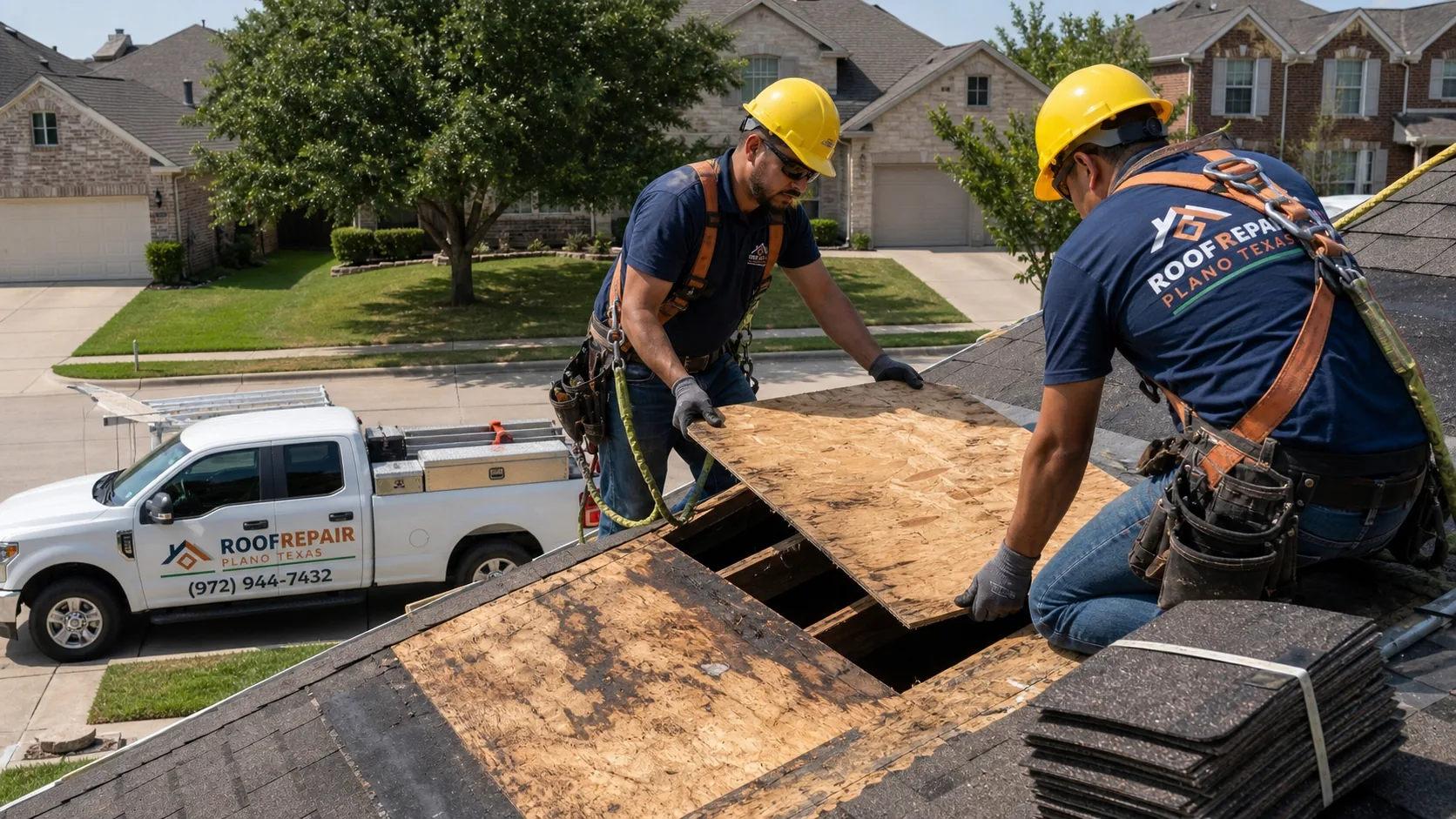
Roof deck repair involves more than just replacing a piece of plywood. The original leak source must be identified and repaired, the damaged area properly removed, and the new decking integrated with the existing structure and roofing material.
Identify the Leak Source
Before addressing the deck, we locate and repair the original cause of water entry — whether it's failed flashing, a cracked pipe boot, damaged shingles, or a membrane failure. Replacing decking without fixing the leak source means the new wood will eventually suffer the same fate.
Remove Roofing Material & Expose the Deck
We carefully remove the shingles, underlayment, or membrane in the affected area to expose the full extent of the deck damage. This reveals whether the problem is limited to a small section or extends beyond what was visible from the attic.
Cut Out Damaged Decking & Inspect Framing
We remove deteriorated plywood or OSB back to the nearest sound rafter or truss supports, ensuring the new sheathing has solid bearing points. The underlying rafters and trusses are checked for moisture damage. If structural concerns are identified, we recommend further professional evaluation before proceeding.
Install New Decking & Restore Roof Layers
New sheathing matching the existing thickness and type is fastened securely to the framing. Fresh underlayment is installed, and the roofing material — shingles, membrane, or tile — is restored to create a continuous, watertight surface. All work is documented with photos.
Why Roof Deck Damage Can't Be Patched Over
It's tempting to lay new shingles or membrane over decking that looks mostly intact from above. But compromised sheathing cannot hold fasteners properly, doesn't provide a flat nailing surface, and continues to deteriorate beneath the new material. The result is a repair that fails prematurely — sometimes within a single storm season in North Texas.
OSB is particularly vulnerable once it absorbs moisture. Unlike plywood, which can sometimes dry out and retain some strength, OSB tends to swell and delaminate permanently once saturated. In Plano, where heavy rainfall followed by intense heat creates a cycle of wetting and rapid drying, damaged OSB rarely recovers its original structural capacity. Replacing the damaged sections — rather than covering them — is the only approach that restores the roof's intended performance.
Leak Repair to Prevent Deck DamageWhen Structural Evaluation Is Needed
In most cases, deck damage from a roof leak is limited to the sheathing layer and can be repaired by replacing the affected plywood or OSB sections. However, when water has been reaching the framing for an extended period — softening rafters, trusses, or load-bearing members — the situation goes beyond a standard roofing repair. If we identify structural concerns during a deck repair, we will recommend a licensed structural professional evaluate the affected framing before the roofing system is restored. Safety comes first.
Roof Deck Repair FAQs
Signs of roof deck damage include sagging areas visible from inside the attic, soft or spongy spots on the roof surface, persistent water stains that keep returning after surface repairs, visible mold or dark discoloration on the underside of the decking, and a musty odor in the attic. If you can safely access your attic, look for darkened wood, delaminating plywood layers, or areas where the wood has lost its structural rigidity.
Yes, in most cases only the confirmed damaged sections need to be replaced. We remove roofing material in the affected area, cut out the deteriorated decking back to the nearest supporting rafters or trusses, and install new sheathing that matches the existing thickness and material. This targeted approach avoids the cost of a full deck replacement when the surrounding structure is still sound.
The most common cause is a prolonged roof leak that was not repaired — or was inadequately patched — allowing moisture to saturate the plywood or OSB over time. Failed pipe boots, deteriorated flashing, missing shingles, and compromised flat roof membranes all allow water to reach the deck. In the Plano climate, the combination of heavy rainfall and extreme summer heat creates conditions where wet decking deteriorates faster than in drier regions.
It depends on the cause. If the deck damage resulted from a covered event — such as sudden storm damage, hail, or wind — it may be eligible for a claim, subject to your policy terms, deductible, and insurer approval. Damage caused by long-term neglect or deferred maintenance is typically not covered. We can provide documentation and photos of the damage when requested, but coverage decisions are made by your insurance provider.
A localized deck repair — replacing one or two sheets of damaged plywood and restoring the underlayment and roofing material — is typically completed within one to two days. Larger areas of damage, or situations where multiple sections of decking need replacement, may require additional time. We provide a realistic timeline based on the scope identified during the inspection.
Sagging Roof, Recurring Leak, or Attic Moisture? Schedule a Deck Evaluation
If your roof shows signs of structural weakness, persistent leaks that won't stop, or attic conditions suggesting prolonged moisture exposure, contact us for a comprehensive roof deck evaluation. We will assess the decking and framing condition, identify the leak source, and provide a clear repair scope with documented findings — before any work begins.