
Metal Roof Repair in Plano, TX
Metal roofing systems across Plano residential and commercial properties deliver strong wind resistance, fire protection, and long service life — but they are not maintenance-free. Thermal movement, fastener fatigue, hail impact, and sealant deterioration can compromise panel integrity over time. We diagnose and repair metal roof problems at the component level, restoring weather-tight performance without unnecessary full replacement.
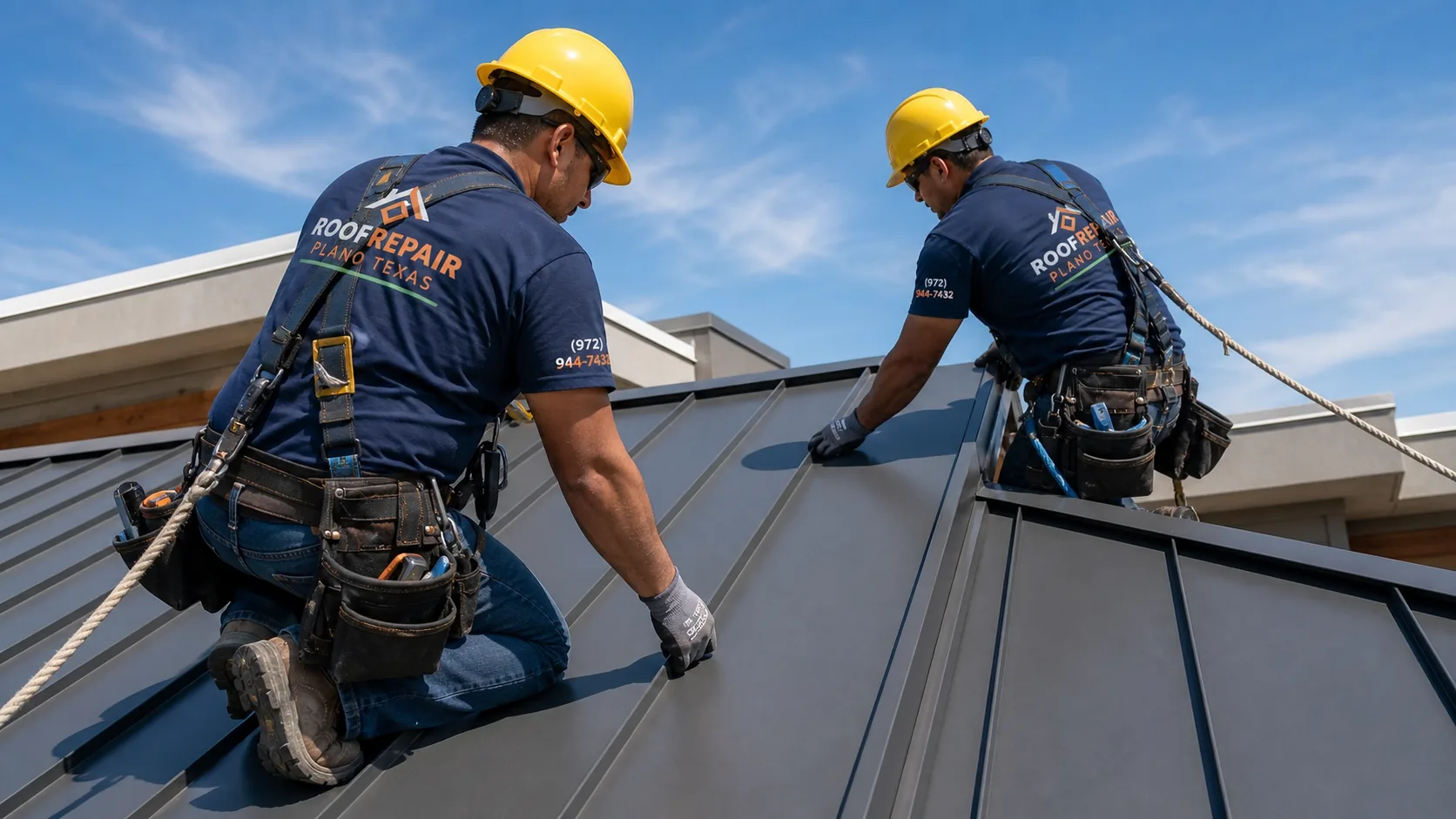
Common Metal Roof Damage in Plano
Metal roofs handle North Texas weather well overall, but specific failure points develop over time — particularly around fasteners, seams, and transitions where different materials meet.
Loose and Backed-Out Fasteners
Exposed-fastener metal roofs are especially vulnerable to the daily thermal cycling Plano experiences. Each expansion-contraction cycle works the screw slightly, and over enough seasons the fastener backs out of the purlin or decking. Once the rubber washer lifts from the panel surface, rainwater has a direct path into the roof structure.
- Visible screw heads sitting above the panel surface
- Rubber washers that are cracked or compressed flat
- Water stains on the ceiling below fastener rows
Hail Dents and Panel Punctures
Plano sits squarely in the North Texas hail corridor. Large hailstones dent metal panels, and severe impacts can crack protective coatings or puncture thinner-gauge material entirely. Even when dents appear cosmetic, the damaged finish leaves exposed metal susceptible to moisture and eventual corrosion at each impact point.
- Scattered dimples or dents across the panel surface
- Chipped or flaked paint finish at impact sites
- Visible punctures on corrugated or thinner panels
Failed Seams and Sealant Breakdown
Panel overlap seams, ridge cap connections, and penetration seals rely on sealants that deteriorate under intense UV exposure and North Texas heat. Once the sealant bond fails, wind-driven rain penetrates through the gap. On standing seam systems, the mechanical lock can loosen at transitions where thermal movement is concentrated.
- Visible gaps at panel overlaps or ridge caps
- Dried, cracked, or separated sealant beads
- Water entry during heavy or wind-driven rain
Corrosion at Cut Edges and Scratches
Factory-applied coatings protect metal panels from oxidation, but raw metal exposed at field-cut edges, drill holes, and surface scratches is unprotected. In Plano's climate — where freeze-thaw moisture, summer humidity, and occasional pooling water all contribute — corrosion can develop at these vulnerable points and spread beneath the surrounding finish over time.
- Rust-colored streaks running from cut edges or fastener holes
- Bubbling or flaking paint around scratched areas
- Discolored patches where coating has lifted from the panel
How We Evaluate Metal Roof Damage
Metal roofing repairs require identifying the specific failure mechanism — not just covering the symptom with caulk.
Panel and Fastener Assessment
We walk the roof surface systematically, checking each panel for dents, punctures, lifted seams, and coating damage. On exposed-fastener systems, we inspect every fastener row for backed-out screws, failed washers, and over-driven fasteners that have dimpled the panel and broken the seal. The fastener pattern tells us whether the problem is isolated or developing across the entire roof.
Seam and Sealant Inspection
Panel overlap joints, ridge caps, hip caps, and endwall transitions all rely on sealant integrity. We test each sealant bead for adhesion and flexibility. On standing seam roofs, we check the mechanical lock engagement and look for panel movement that may indicate clip failure or thermal stress beyond the system's designed tolerance.
Flashing and Penetration Review
Metal roof failures frequently occur at penetrations and transitions rather than on the field panels themselves. We inspect flashing at walls, chimneys, and roof edges, along with pipe boots and vent collars. Incompatible metals at these junctions can also accelerate galvanic corrosion — something we specifically look for.
Repair Scope and Written Estimate
After completing the inspection, we define a clear repair scope. Some metal roof issues — like re-securing loose fasteners or replacing a failed sealant — are straightforward. Panel replacement is more involved and may require removing adjacent panels for access. We document everything with photos and provide a written estimate that explains what needs to be done and why.
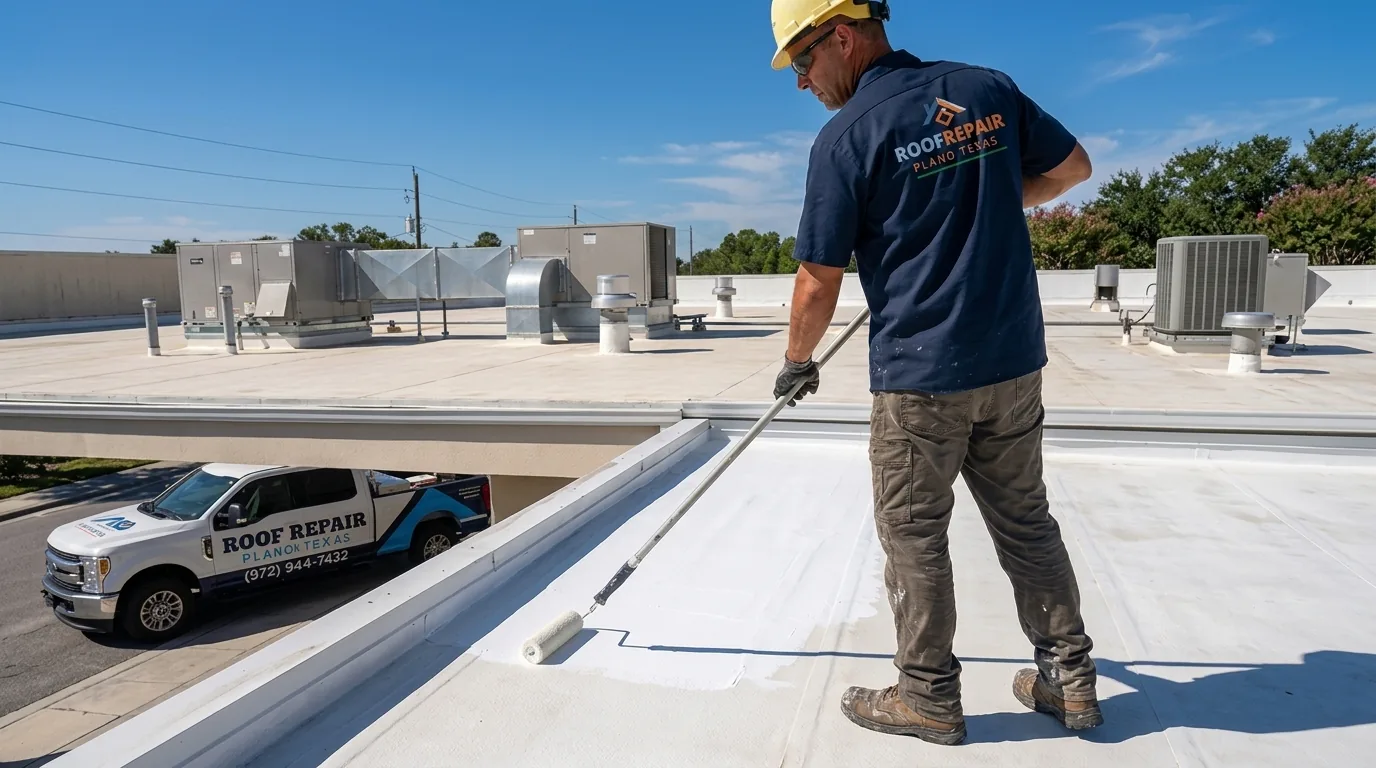
Thermal Movement and Metal Roofing in Plano
Metal expands and contracts more than most other roofing materials. In Plano, where summer roof surface temperatures can exceed 160°F during the afternoon and drop significantly overnight, this daily thermal cycling creates measurable panel movement throughout the year.
Standing seam systems are designed to accommodate this movement through floating clips that allow panels to expand and contract without stress. When clips fail or panels are improperly fastened, the movement transfers to fasteners, seams, and flashings — leading to loosened connections and eventual leaks.
Exposed-fastener systems handle thermal movement differently. Each screw penetrates the panel and the substrate, creating a fixed point that resists the panel's natural expansion. Over time, this resistance works the fastener loose and elongates the screw hole. A thorough metal roof inspection by our Plano roofing team identifies which fasteners need attention before small gaps become active leak sources.
Metal Roof Repair FAQ
It depends on the severity. Minor cosmetic dents that have not compromised the panel's protective coating or structural integrity may not require replacement. However, dents that have cracked the finish, creased the metal, or created low spots where water pools typically require panel replacement to restore proper function and prevent corrosion.
Metal expands and contracts significantly with temperature changes. Plano's extreme summer heat followed by cooler nights creates daily thermal cycling that gradually loosens exposed fasteners over time. Each expansion-contraction cycle works the fastener slightly, and after enough cycles, the screw or nail backs out of the substrate — breaking the weather seal and creating a potential leak point.
Hail typically dents metal panels rather than fracturing them the way it bruises or cracks shingles. While dents may be cosmetic on thicker-gauge panels, they can crack protective coatings, create low spots that hold water, and damage panel seams. On thinner-gauge or corrugated metal, large hail can puncture through the material entirely.
Modern metal roofing panels are coated with protective finishes designed to resist corrosion. However, rust can develop at cut edges where raw metal is exposed, around scratches that penetrate the coating, at fastener holes where the seal has failed, and where dissimilar metals are in contact. Plano's occasional freeze-thaw moisture combined with summer humidity can accelerate corrosion at these vulnerable points.
Metal roof repair costs vary based on the panel type, profile, gauge, coating, and the specific repair needed. Some metal repairs — such as replacing a failed sealant or re-securing a loose fastener — are straightforward. Panel replacement can be more involved because it may require removing and reinstalling surrounding panels to access the damaged section. A written estimate after an on-site inspection provides the most accurate comparison.
Loose Panels, Failed Fasteners, or Storm Damage? Schedule an Inspection
If your metal roof is showing signs of fastener failure, open seams, hail dents, or active leaks, contact us to schedule an on-site inspection. We will assess the panel condition, check every transition and penetration point, and provide a detailed written estimate for the repair work your roof needs.